

DEBT TIPS!
Owing money does not negatively reflect on your character.

Debt is a financial obligation to another party, usually defined by a written agreement.
Borrowing can be in the form of a loan, a mortgage, credit card or a cash advance.

Debt can also be instigated by the purchase of goods or services, or fees and taxes billed to customers.

Lenders can be:
Banks/financial institution
Businesses
Utilities
Government entities
Friends/family
Borrowing can be used:
To pay for an item one would not be able to with cash (i.e. house, car, education)
For convenience
To earn cashback/rewards
To finance leverage
To build credit score
Out of necessities

Words to look out for!
Principal: amount that is borrowed
Term: length of time the funds are borrowed
Interest: a pre-determined rate charged to the borrower at regular intervals. i.e the cost of “borrowing” the funds.
Simple Interest: Interest is calculated on the principal at regular intervals.
Accrued Interest: Interest that accumulates throughout
the loan periods.
Compound Interest: Interest is calculated on the principal amount plus previously accumulated interest.
Fixed Interest: The same interest rate is charged for the term of the loan.
Variable Interest: The interest rate fluctuates, normally based on the central bank rate (set by the Bank of Canada).
Prime Interest Rate: The base rate used by most financial institutions.

DEBT STATUSES
In Good Standing: Payments have been made on time.
In Arrears: One or more payments are overdue, but the terms of the agreement have not been broken.
In Default: Payments have been made on time.
In Collection: One or more payments are overdue, but the terms of the agreement have not been broken.
DEBT TYPE
Ways to Borrow
SECURED
Borrowed against an asset/collateral, or with a guarantor (e.g. mortgage, car loan), usually means a lower interest rate than unsecured debt
UNSECURED
Based on credit score and ability to repay (e.g. student loans, credit cards)
TYPES OF BORROWING
BANK LOAN
LINE OF CREDIT
CREDIT CARD
MORTGAGE
HOME EQUITY LOAN
STUDENT LOAN
PAYDAY LOAN
BUSINESS LOAN
CONSTRUCTION LOAN
CONSOLIDATION LOAN
WHAT’S CREDIT?
Using a credit card can be convenient, earn cash-back or other rewards, and can be a good way to build a credit score when paid on time.
Credit cards normally have a minimum payment due each statement period; paying this amount will keep your card in good standing, but you will be charged interest on the unpaid balance after the due date.
Cash advances from a credit card are normally charged interest immediately, and the interest is often at a higher rate than on purchases.
Most credit cards begin charging interest on purchases 21 days after the end of the statement period.
CREDIT SCORE
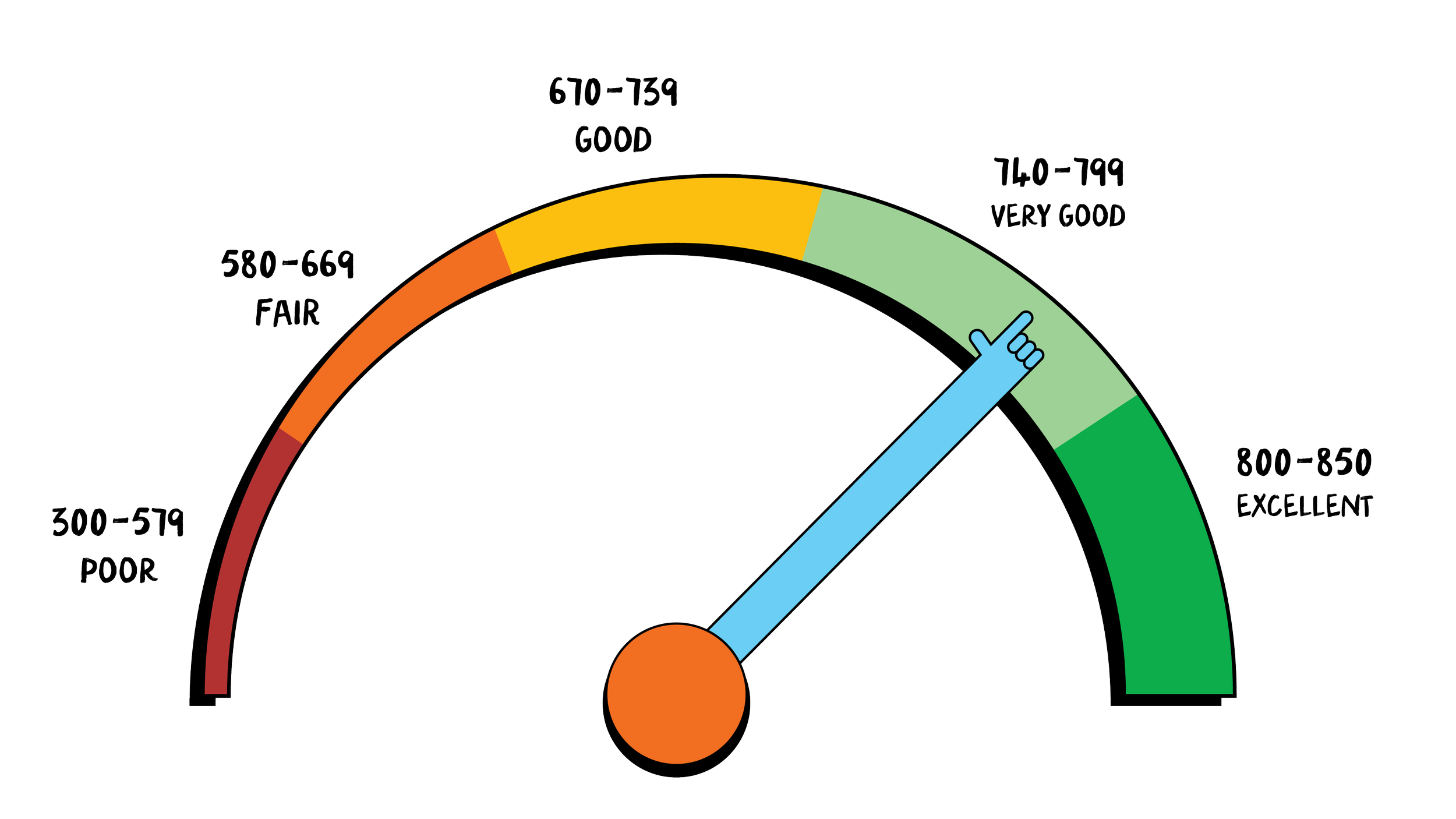
To determine your creditworthiness, or the likelihood of you being able to make payments on time, lenders will look at your credit score, a 3-digit number that summarizes the information on your credit report.